Recycling and Sustainability for House Clearance Purfleet
Purfleet house clearance must be done responsibly. Our sustainability page outlines how local clearance work can support an
eco-friendly waste disposal area and create a truly
sustainable rubbish area in and around Purfleet. We set clear targets, work with local transfer stations and charities, and operate a low-carbon fleet so that every property clearance moves materials away from landfill and into reuse, recycling or proper treatment.
Our Eco-First Approach to Waste Disposal
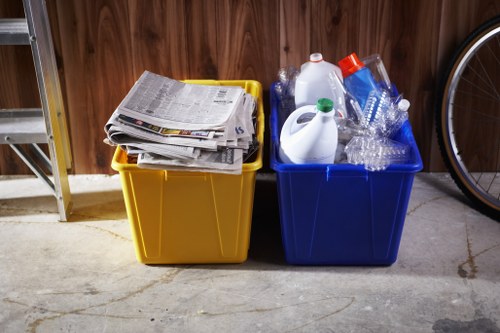
We treat each job as an opportunity to divert materials. For every house clearance in Purfleet we plan sorting at source, separation at transfer hubs and prioritised donation of serviceable items. This approach helps achieve measurable results for a greener Purfleet clearance service. The team follows borough guidance on kerbside and bulky waste separation: many local authorities in the area promote separate streams for glass, paper/card, mixed plastics, food waste and residual waste, and we mirror those separation principles for larger clearances.
Targets, Metrics and Local Transfer Stations
Our ambitious recycling percentage target is to divert
70% of all household clearance materials from landfill within three years. We report performance regularly and aim to improve year on year. Key components include:
- Target: 70% recycling and reuse for house clearances across Purfleet operations.
- Local transfer stations: we utilise nearby transfer facilities serving Thurrock and neighbouring boroughs to ensure correct sorting and onward processing.
- Material tracking: documented flows for bulky waste, electricals, and building debris.
These transfer stations act as sorting points where items are separated for recycling, recovery, or responsible disposal, helping to maintain a true eco-friendly waste disposal area for the community.
Working with Boroughs and Local Waste Separation Schemes
We align our Purfleet clearance work with the local authorities' waste separation policies. Thurrock Council and neighbouring boroughs operate practical schemes for dry recyclables, food waste and specialised collections; our teams follow those patterns when classifying materials on-site. By doing so we help make the house clearance supply chain compatible with local recycling infrastructure, increasing the likelihood that glass, paper, metals and organics enter the correct recycling streams.
Partnerships with Charities and Reuse Organisations
We maintain active relationships with local charitable organisations and national donation partners to maximise reuse. Rather than consigning lightly used furniture and household items to recycling facilities, we prioritise donation or redistribution. Our partners include community furniture projects, social enterprises and charity shops that accept good condition items for resale or direct support to local families. Typical partnership outcomes include:
- Furniture and soft furnishings recovered for reuse to support local causes.
- Working electricals and appliances tested and passed on to charity outlets.
- Collaborations with reuse networks that keep materials circulating locally.
These links help turn domestic clearances into social value, reducing waste while supporting vulnerable residents.
Material-Specific Recycling Activities
Our rounds and sorting operations are tailored to material types frequently encountered in Purfleet clearances. Common recycling activities include separation and processing of metals, timber and wood, textiles, mixed plastics, glass and WEEE (waste electrical and electronic equipment). For hazardous or specialist wastes such as asbestos-containing materials, paint, oils and batteries, we follow licensed treatment and disposal routes to protect people and the environment.
Our emphasis is on reuse first, recycling second, and safe disposal last.
Low-Carbon Fleet and Route Efficiency
To reduce the environmental footprint of collection and clearance work, we operate low-carbon vans and implement route optimisation. Our fleet includes Euro 6 diesel vans and a growing number of electric or hybrid vehicles for shorter urban runs. These low-emission vehicles, combined with scheduling software and consolidated pick-ups, reduce fuel use and emissions per job, supporting a truly sustainable rubbish area across the Purfleet locality.
Fleet decarbonisation is a core part of our carbon reduction plan.
Measuring Impact and Community Initiatives
Measurement underpins improvement. We track kilograms diverted, reuse rates, and number of donations per clearance to ensure transparency. Community initiatives are part of the strategy: events to promote furniture reuse, collaborations with local neighbourhood groups to run collection days, and support for repair cafes that keep items in use longer.
These local partnerships and measurable goals reinforce the practical steps we take to build an eco-friendly waste disposal area in Purfleet and the surrounding boroughs.
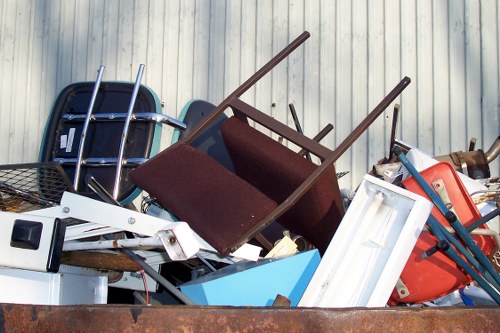
Our Commitment to a Sustainable Purfleet Clearance Service
In summary, our approach to house clearance in Purfleet prioritises sustainability at every stage. From sorting on-site and using nearby transfer stations, to partnerships that prioritise reuse and a low-carbon vehicle fleet, we work to create a durable, replicable model for local clearances. We will continue to work with councils, charities and community groups to raise the recycling percentage target and expand reuse opportunities, ensuring that every clearance contributes to a greener future for Purfleet and its residents.
