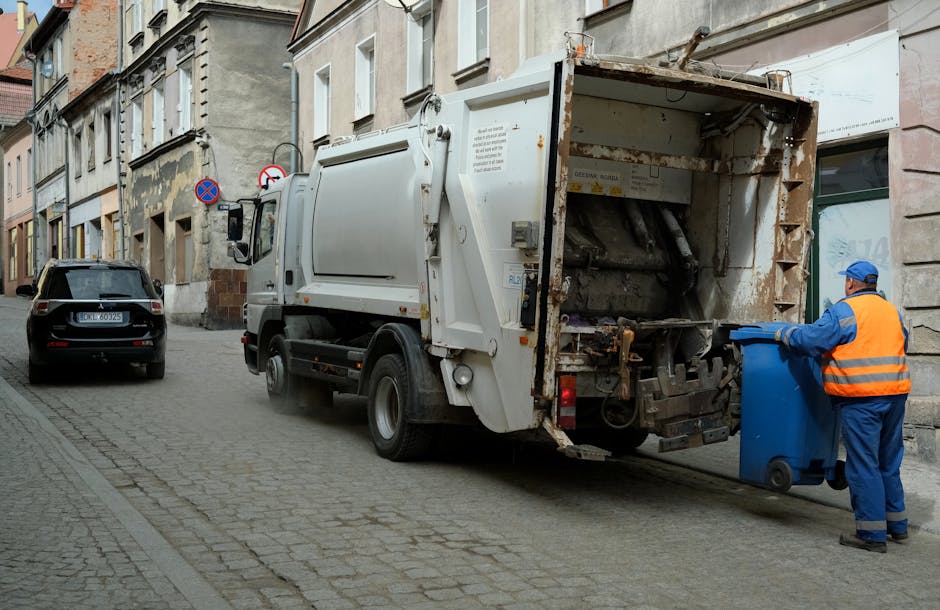
Booking mistakes to avoid for Purfleet rubbish removal

If you are arranging rubbish removal in Purfleet, the booking itself can make the difference between a smooth clearance and a frustrating day of delays, surprise costs, or a van that turns up and cannot take half the load. That is exactly why understanding the booking mistakes to avoid for Purfleet rubbish removal matters before you confirm anything. A few small checks upfront can save you time, money, and a lot of back-and-forth later on.
To be fair, most booking problems are not dramatic. They are the kind that creep in quietly: not enough detail about the waste, the wrong arrival expectations, no plan for access, or assumptions about what is included. In this guide, we will walk through the practical mistakes people make, how booking usually works, and the best way to avoid awkward surprises when you need waste taken away from a home, flat, loft, garage, office, or garden in Purfleet.
Why booking mistakes matter
Rubbish removal looks simple on the surface. You have unwanted items, you book a clearance, and the waste disappears. But the booking stage is where most avoidable problems start. If you do not describe the load properly, the crew may arrive with the wrong vehicle size, the wrong equipment, or the wrong time slot. That can mean a delayed job, a revised price, or a second visit. Nobody wants that, especially when the hallway is already full of boxes and you can smell that slightly damp loft dust in the air.
The main reason these mistakes matter is control. A clear booking gives you control over cost, timing, access, and disposal expectations. A vague booking gives the provider too little to work with and gives you too much room for disappointment. In local jobs, that is even more obvious because access can be tighter, parking can be limited, and multi-storey flats or shared entrances can complicate a job quickly.
There is also the trust angle. A reliable clearance service should be able to explain what happens, what is included, and what needs confirming before the day arrives. If they cannot, or if you skip those details yourself, the job becomes guesswork. And guesswork with waste is rarely a good idea.
Key takeaway: the smartest rubbish removal booking is not the fastest one; it is the one with enough detail to match the right crew, the right vehicle, and the right price to the right job.
If you are comparing services, it can also help to understand the type of clearance you need. For example, a house move, a loft tidy-up, or a business clearance all create different booking questions. You can see how those service types differ by looking at house clearance, loft clearance, or office clearance options.
How rubbish removal booking works
Most rubbish removal bookings follow a straightforward pattern, though the details vary. You usually start by describing the waste, then share your location, access notes, and preferred timing. After that, you receive a quote or a price guide, and if everything makes sense, you book a slot. On the day, the team arrives, assesses the load if needed, clears the waste, and finishes with payment or confirmation depending on the service terms.
That sounds neat on paper. In reality, a proper booking often involves a few more questions. Is the waste loose or bagged? Is it upstairs? Can a vehicle park close by? Are there heavy items, fragile surfaces, or narrow staircases? These details are not overkill. They are the things that stop a crew from turning up and discovering the job is twice as awkward as expected.
For example, clearing a garage is very different from shifting a couple of old sofas. One may involve mixed junk, boxes, broken tools, and heavy items. The other may be a straightforward furniture job. If the booking does not reflect that difference, the job can be mispriced or mis-scheduled from the start. That is why services such as garage clearance and furniture disposal are worth separating mentally, even if the end result is simply "please take all this away."
It also helps to think of booking as a short briefing, not a quick click. A better briefing leads to a cleaner result. Simple as that.
Key benefits and practical advantages
When you avoid booking mistakes, the benefits show up in practical ways rather than flashy ones. Your quote is more likely to be accurate. The team is more likely to bring the right vehicle. The collection is more likely to happen on time. And you are less likely to feel that annoying edge of uncertainty while waiting at the window wondering whether the van is actually coming.
- Fewer surprise charges: clear details make pricing more predictable.
- Better timekeeping: realistic arrival windows reduce stress and missed handovers.
- Safer lifting and handling: the right team can prepare for heavy or awkward items.
- Faster completion: fewer misunderstandings mean less time spent re-explaining the job on site.
- More suitable disposal: mixed loads can be planned properly for recycling or lawful disposal.
- Less disruption: neighbours, tenants, or colleagues are less likely to be affected by a poorly organised collection.
There is a smaller but important benefit too: peace of mind. Once you have done the booking properly, you can get on with the rest of your day. No phone-call scramble, no "sorry, we thought it was all upstairs," no awkward discussion beside a pile of old furniture and broken shelving. Lovely.
For people managing different property types, careful booking can also support a broader clearance plan. If you are doing a full property tidy-up, it may make sense to look at home clearance or even furniture clearance if the main issue is bulky items rather than mixed household waste.
Who this is for and when it makes sense
This guidance is for anyone booking rubbish removal in Purfleet and wanting to avoid hassle. That includes homeowners, landlords, tenants, letting agents, shop owners, office managers, tradespeople, and families dealing with a house that has become cluttered over time. It is also useful if you are not booking often and are understandably unsure what details matter most.
It makes sense especially in situations like these:
- you are clearing a property before or after a move
- you need a loft, garage, shed, or outbuilding emptied
- you have bulky furniture to remove
- you are dealing with builders' waste after a renovation
- you are managing business waste or office clutter
- you want a one-off clearance rather than an ongoing collection arrangement
If your job is commercial, the booking needs tend to be a bit tighter. You may need a more exact time slot, specific loading instructions, and clear confirmation of what cannot be taken. For business premises, business waste removal is often a more appropriate starting point than a generic clearance request.
If the waste comes from building work, it is worth being clear from the start. That makes it easier to discuss builders waste clearance rather than assuming standard household rubbish handling will fit the job. It often does not.
Step-by-step guidance
Here is a sensible way to book without making the usual mistakes. You do not need a notebook and three cups of tea, though that does help.
- List exactly what needs removing. Write down the item types, rough quantity, and whether anything is especially heavy, fragile, or awkward.
- Check access honestly. Note stairs, lifts, tight paths, parking limits, basement storage, or shared entrances.
- Separate useful from unwanted items. If you are keeping some things, put them clearly aside before the visit. Misunderstandings happen fast in a cluttered room.
- Ask what is included. Confirm loading, disposal, labour, and any extra handling requirements.
- Clarify timing. Ask whether the booking is a fixed arrival slot or a wider window. That detail matters more than people think.
- Check payment and quote terms. Make sure you understand how the price works and what could change it.
- Flag anything unusual. Mention very heavy furniture, asbestos suspicion, sharp waste, confidential materials, or access restrictions.
- Confirm contact details. Keep the booking reference, phone number, and date handy in case you need to make a quick update.
A useful habit is to take a few photos before you book. Not glamorous, but helpful. Photos let you show the volume of waste, the style of items, and the access situation much more clearly than a rushed phone description ever will. A dusty stack of mixed junk in a dim garage can look smaller or bigger than it really is. Photos cut through that.
If you want to understand the service structure before booking, looking at waste removal information can help you match the right job to the right service type, rather than assuming every clearance works the same way.
Expert tips for better results
In our experience, the best bookings are the ones that answer questions before they are asked. That is the real secret. It is not about being overly detailed for the sake of it. It is about removing uncertainty.
Tip 1: Describe the load in categories. For example: furniture, general household waste, garden cuttings, building debris, or office equipment. Mixed loads can be handled, but they need to be described that way.
Tip 2: Mention volume in simple terms. "A few bags" and "a full garage" are not the same thing. If it helps, think in practical terms: one corner, one room, one van load, two van loads. Even rough estimates are better than nothing.
Tip 3: Be honest about access. A narrow stairwell or a sixth-floor flat with no lift changes the job. It really does. If you say it is easy access when it is not, the appointment can become awkward very quickly.
Tip 4: Book around your own schedule, not wishful thinking. If you need the driveway clear by 10 a.m. for a delivery, say so. If the property is only accessible after a tenant leaves, explain that too.
Tip 5: Ask about sorting and recycling expectations. Some clearances involve separating reusable items from general waste. If sustainability matters to you, check how the provider approaches recycling and sorting. A sensible next step is to read about recycling and sustainability so you understand the broader approach.
Tip 6: Keep the booking conversation calm and specific. Nobody needs a thirty-minute detective story. Clear facts beat dramatic explanations every time.
Expert summary: Good rubbish removal bookings are built on three things: accurate volume, honest access, and clear expectations. If those three are right, the rest usually falls into place.
Common mistakes to avoid
This is the section that saves people the most trouble. Let's face it, most booking mistakes happen because the job feels simpler than it is.
1. Underestimating how much waste there is
People often say "it is just a few bits" when the room is actually packed. That can lead to the wrong vehicle size or a quote that needs adjusting. Estimate generously. If there is a pile in the corner, a stack behind the door, and a few extra bags in the kitchen, mention all of it.
2. Leaving out access details
No lift, narrow stairs, limited parking, or a long walk from the road are all relevant. If you forget to mention them, the booking may look easier than it really is. That is usually when delays start.
3. Assuming all waste is treated the same
Furniture, garden waste, builders' rubble, and office materials are not identical. Some items need more labour. Some need more sorting. Some are heavier than they look, and that is always a surprise until you try to lift one. For mixed or bulky items, it helps to understand the difference between services like garden clearance and furniture clearance.
4. Not asking what is excluded
Certain items may need special handling or may not be accepted in a standard booking. If you are unsure, ask before the day. It is much easier to clarify than to stand beside the van debating a mystery container of old chemicals.
5. Booking too late
If you leave the arrangement until the last minute, you may end up with less choice on timing and less room to correct errors. That matters if you are coordinating a move, a tenancy handover, or building work.
6. Forgetting to check the quote basis
Some prices depend on what is actually present on arrival. Others are more fixed if the details are precise. If you do not understand the basis of the quote, you may feel caught out later, even if the service was acting fairly.
7. Not preparing the waste before collection
If the booking assumes the items are ready at the curb but they are still spread through the house, the team may need more time. Preparing the load properly can make the job far smoother. A lot smoother, in fact.
8. Forgetting to mention fragile surroundings
Fresh paint, polished floors, tight corners, glass doors, and communal halls all need care. If you do not mention these, the crew may not know to take extra precautions.
Tools, resources and recommendations
You do not need specialised software to book rubbish removal well. A few basic tools are enough, and they are usually already on your phone or in your kitchen drawer.
- Phone camera: take clear photos of the waste from more than one angle.
- Notes app: jot down item types, rough quantities, and access details.
- Measurement tape: useful for bulky items, doorways, or loft hatch spaces.
- Calendar reminder: set reminders for booking time, arrival window, and any access arrangements.
- Bag labels or sticky notes: handy if some items must stay and others must go.
As a practical recommendation, keep the booking conversation short but complete. You should be able to explain the job in a minute or two, then follow up with photos if needed. That is usually enough for a serious provider to give you a sensible response.
If you are considering a specific type of clearance, relevant service pages can help you frame the job more clearly. For example, flat clearance is useful where access is compact or shared, while garage clearance is better for mixed stored items, tools, and long-forgotten odds and ends.
And if your issue is a larger property or a more structured site, looking at house clearance or office clearance can help you match expectations to the right kind of job from the outset.
Law, compliance and best practice
For rubbish removal in the UK, it is sensible to use a provider that follows proper waste handling practices, carries appropriate insurance, and disposes of material responsibly. You do not need to become an expert in waste legislation, but you should expect the service to behave professionally and lawfully.
Best practice usually includes careful load description, sensible segregation where possible, responsible recycling, safe manual handling, and clear communication about what will happen to the waste. If the job includes hazardous or unusual items, that needs to be discussed in advance. Do not leave that to chance.
There is also a practical side to compliance. If you are a landlord, tenant, business owner, or managing agent, poor booking information can create avoidable disputes about access, responsibility, or completion. Clear terms and accurate descriptions reduce that risk. If you want to understand broader service expectations, it can be helpful to review terms and conditions, insurance and safety, and health and safety policy information where available.
For business users, data and premises responsibility also matter. If old paperwork, devices, or office furniture are involved, you may want to make sure the booking reflects secure handling expectations. Small detail, big difference.
Options and comparison
Not every clearance needs the same booking style. Choosing the right approach helps you avoid unnecessary confusion.
| Booking approach | Best for | Main benefit | Watch out for |
|---|---|---|---|
| Photo-led booking | Mixed household waste, bulky items, garages | Gives a better sense of volume and access | Photos still need a written description |
| Item-by-item booking | Furniture, office equipment, specific possessions | Very clear and easy to price | Takes longer to prepare |
| Room-based booking | Lofts, flats, houses, storage rooms | Useful for larger clearances | Can hide hidden items if you are not thorough |
| Load-size booking | General rubbish removal and mixed junk | Quick and practical | Needs honest estimating |
In simple terms, photo-led bookings are usually best when the job is visually messy. Item-by-item bookings are best when the waste is specific. Room-based bookings suit fuller clearances. Load-size bookings are handy, but only if you do not understate what is actually there. That last one catches people out quite often, truth be told.
Real-world example
Picture a Friday morning in Purfleet. A homeowner has been meaning to clear the garage for months. There are old chairs, cracked plant pots, cardboard, a broken treadmill, and a few bags of general rubbish. They book in a hurry and say, "It's just a garage with some bits in it."
The team arrives and finds the garage is packed from front to back, with narrow side access and two heavy items that need careful lifting. The original booking did not mention the treadmill, the limited parking, or the amount of mixed waste. The job still gets done, but the timing is tighter and the quote discussion takes longer than anyone wanted. A small gap in the booking created an awkward morning.
Now compare that with a better booking. The customer sends four photos, says the garage is half to three-quarters full, mentions the treadmill, gives parking details, and flags that the items are on the ground floor. The provider can prepare properly. The visit feels calmer. The waste is cleared without drama. Everyone gets on with life. That is the kind of boring success you want.
This is where services like furniture disposal or waste removal become much easier to use because the booking is accurate from the start rather than improvised on arrival.
Practical checklist
Use this quick checklist before you confirm the booking. It is simple, but it works.
- Have I described the waste clearly?
- Have I included rough quantities or load size?
- Have I mentioned access, parking, stairs, and any lift restrictions?
- Have I said whether the load is mixed, bulky, heavy, or fragile?
- Have I checked what is included in the price?
- Have I asked about excluded or special items?
- Have I confirmed the date, arrival window, and contact details?
- Have I prepared the items so they are ready to remove?
- Have I saved photos in case I need to send them quickly?
- Have I reviewed any relevant service or policy pages I need?
If you can tick most of those off, you are probably in good shape. Not perfect, maybe. But good enough to avoid the usual headache.
Conclusion
Booking rubbish removal in Purfleet should feel straightforward, but the best results come from a little extra care at the start. The common mistakes to avoid are usually simple: underestimating the load, forgetting access details, assuming all waste is the same, or booking without checking what is included. Avoid those, and you make the rest of the process far easier.
The main idea is this: the clearer your booking, the smoother your clearance. That means better pricing, fewer delays, safer handling, and far less stress on the day. Whether you are clearing a flat, a garage, an office, or a full house, the same principle applies. Tell the truth about the job, prepare the space, and ask the practical questions early. It is not flashy, but it works.
Get a free quote today and see how much you can save.
And if you are still in the planning stage, that is fine too. Take a breath, gather a few photos, and make the booking on solid ground. A tidy finish always starts with a tidy plan.
Frequently Asked Questions
What details should I give when booking rubbish removal in Purfleet?
Give the item type, rough amount, access information, parking notes, and whether anything is especially heavy, awkward, or fragile. Photos are very helpful too.
Why do rubbish removal quotes change after booking?
Quotes often change when the original description missed important details, such as extra volume, difficult access, or items that need more labour than expected. Clear information reduces that risk.
Is it better to book rubbish removal with photos?
Yes, usually. Photos help the provider see the size, layout, and condition of the waste, which makes the quote and vehicle planning more accurate.
What are the most common booking mistakes people make?
The biggest ones are underestimating volume, forgetting access details, not checking exclusions, and assuming all waste types can be handled the same way.
How far in advance should I book rubbish removal?
As early as you can, especially if you need a specific date or are coordinating with a move, tenancy change, or building work. Leaving it late reduces flexibility.
Do I need to separate different types of waste before booking?
Not always, but it helps to describe them separately if you can. Furniture, garden waste, builders' debris, and general rubbish may all affect the booking differently.
What should I check about access before I book?
Check stairs, lifts, parking, narrow pathways, distance from the vehicle, and any restrictions at the property. Access details can change how the job is priced and planned.
Can rubbish removal cover a whole house clearance?
Yes, if the service is suited to that type of work. For larger domestic jobs, house clearance or home clearance is often a better fit than a general small-load booking.
Are there items that need special handling?
Yes. Some items may need advance discussion because they are hazardous, heavy, delicate, or subject to special disposal requirements. Always mention anything unusual before booking.
How do I avoid paying more than I expected?
Be precise about the waste, confirm what the quote includes, ask about possible extras, and be honest about access. Surprises usually happen when the booking is too vague.
What is the best way to book if I am clearing a flat or apartment?
Give clear lift, stair, and parking details, and say whether the waste is all in one room or spread across the property. A flat clearance often depends on access more than people think.
Should I read terms and policies before booking?
Yes, especially if you are booking a bigger job or need clarity on payment, safety, or responsibilities. It takes a few minutes and can prevent a lot of confusion later.
What if I am not sure how much rubbish I have?
Take a few photos and give a rough estimate based on rooms, corners, or load size. A quick visual description is usually enough to start a proper conversation.
Can I combine furniture and general waste in one booking?
Often yes, but say so clearly. Mixed loads are common, yet they need to be described properly so the provider can plan the right vehicle and disposal method.